
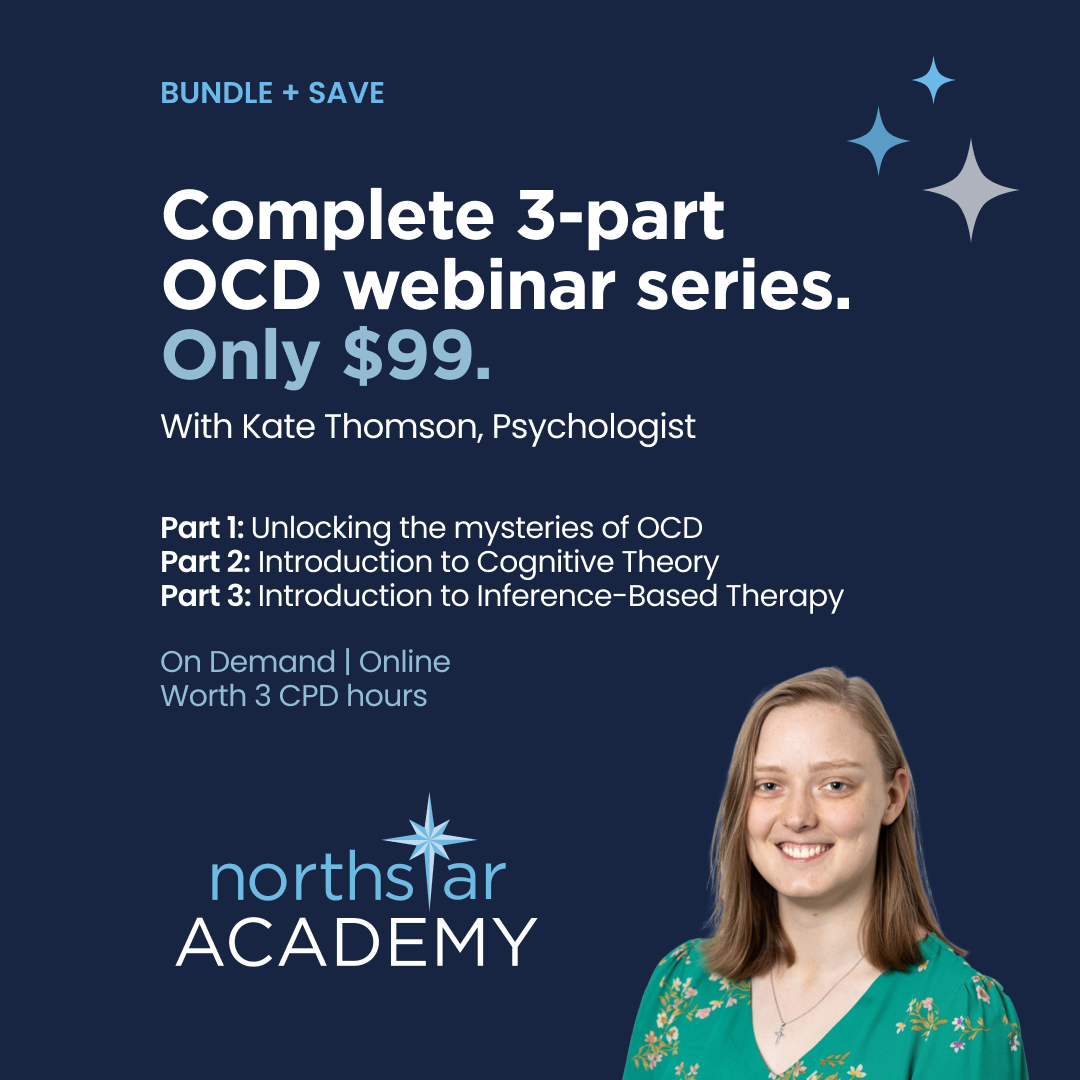
Description
Duration: 3:00 hours +
Part 1: Unlocking the Mysteries of OCD – An Introductory Webinar for Student and Early Career Psychologists
Part 2:Introduction to Cognitive Theory
Part 3: Introduction to Inference-Based Therapy
Part 1: Unlocking the Mysteries of OCD – An Introductory Webinar for Student and Early Career Psychologists
Obsessive-Compulsive Disorder (OCD) presents unique and often complex challenges in clinical practice. This exclusive webinar recording is designed to equip student and provisional psychologists with the foundational knowledge and practical skills needed to enhance clinical practice and drive better client outcomes. Whether you’re new to the field or looking for a refresh, this is your opportunity to build confidence and proficiency in treating OCD.
Key Learning Outcomes:
- Introduction to inference-based therapy
- Exploring the role of doubt in OCD
- Understanding inferential confusion
- Exploring faulty reasoning processes in OCD
- Applying IBT principles in therapy
Bonus: You’ll have access to the recording for 6 months after the purchase date.
Part 2:Introduction to Cognitive Theory
Cognitive theory plays a central role in understanding and treating OCD. The cognitive model underscores that OCD is largely influenced by dysfunctional thinking patterns—specifically, how individuals interpret and respond to their intrusive thoughts. In this on-demand webinar, Psychologist Kate Thomson provides a thorough overview of Cognitive Theory principles and how to effectively treat OCD.
Key Learning Outcomes:
- Develop an understanding of Cognitive Theory principles as specifically applied to the treatment of OCD
- Gain insight into prevalent maladaptive cognitive appraisals associated with OCD symptoms
- Identify and implement evidence-based interventions to modify dysfunctional cognitive appraisals in individuals with OCD
Bonus: You’ll have access to the recording for 6 months after the purchase date.
Part 3: Introduction to Inference-Based Therapy
Inference-Based Therapy (IBT) offers a distinctive cognitive approach to understanding and treating Obsessive-Compulsive Disorder (OCD). Rather than focusing on the content of intrusive thoughts, IBT emphasizes the reasoning processes that lead individuals to distrust their senses and believe in imagined threats. In this on-demand webinar, Psychologist Kate Thomson introduces the foundational principles of Inference-Based Therapy, illustrating how maladaptive inferential thinking contributes to OCD and how clinicians can apply IBT techniques to foster doubt reduction and cognitive flexibility.
Key Learning Outcomes:
- Introduction to inference-based therapy
- Exploring the role of doubt in OCD
- Understanding inferential confusion
- Exploring faulty reasoning processes in OCD
- Applying IBT principles in therapy
Bonus: You’ll have access to the recording for 6 months after the purchase date.
Speaker Bio:
Kate Thomson, Psychologist
Kate works with individuals and families, and is interested in supporting individuals with anxiety disorders, mood disorders, obsessive compulsive disorders, emotional dysregulation, life stress, disordered eating, and neurodiversity. Kate is particularly interested in working with adults, and primarily works within a Cognitive Behavioural approach with additional skills and framing provided from Dialectical Behavioural Therapy, Acceptance and Commitment Therapy, and elements of Schema Therapy.